Buying bespoke jewellery for yourself can feel like a private act with a public outcome. You will wear the piece, answer questions about it and live with the choice. A first bespoke commission adds another layer: you are not choosing from a case, you are helping to make something that did not exist before. The process should feel deliberate, not intimidating. The word bespoke has tailoring roots in late eighteenth-century England, and that is a useful starting point. A commission is a conversation, not an exam.
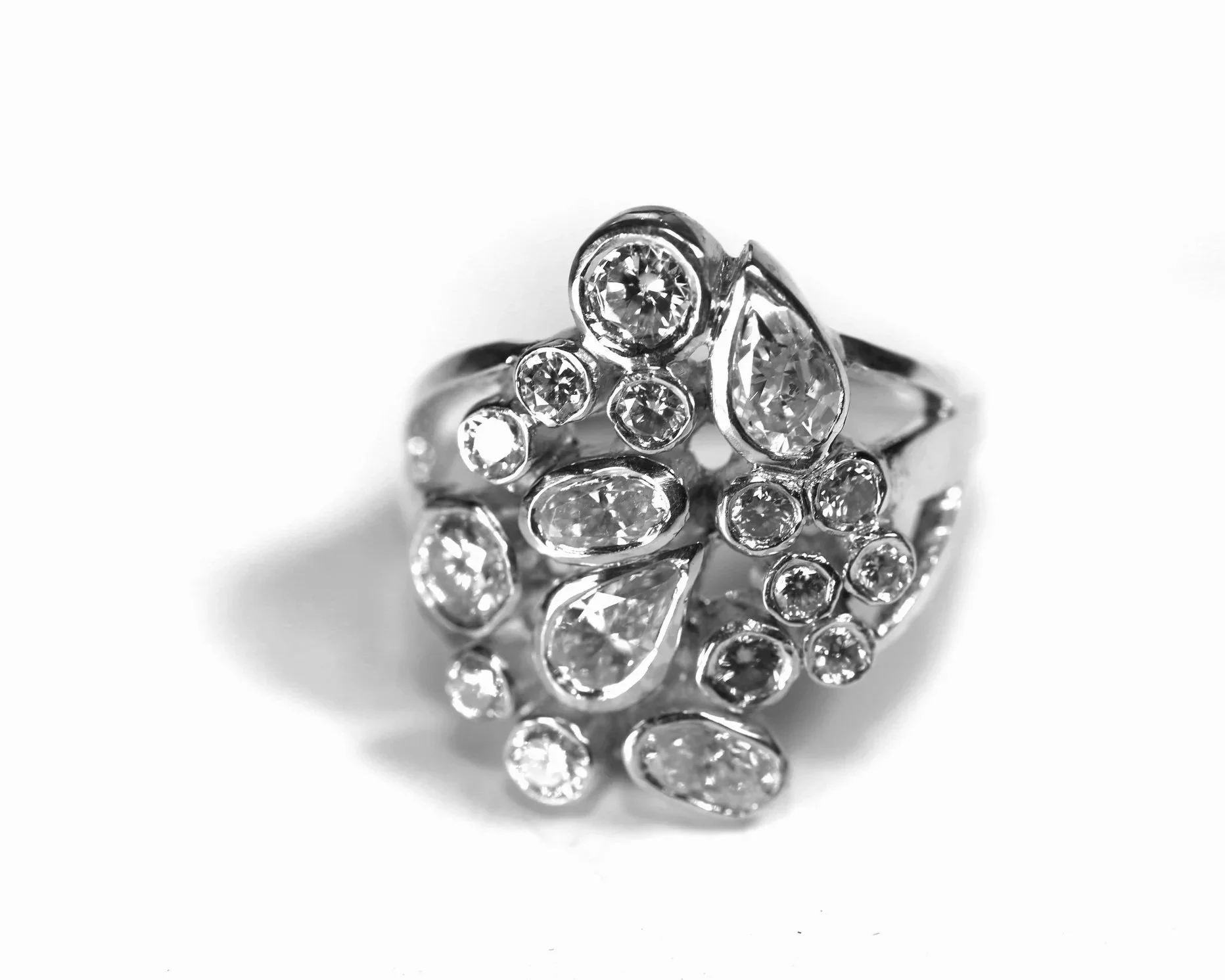
Bespoke cluster ring
Start With the Occasion, Not the Stone
The clearest first commissions begin with a reason, not a shopping list.
The reason can be a birthday, a promotion, a personal recovery, an anniversary or simply a decision to mark a stage of life. Bespoke jewellery allows you to bring personality and uniqueness to the occasion, and you can choose every element. That freedom is the point. It also helps to name the feeling you want: quiet, sculptural, nostalgic, precise. A feeling is easier to design around than a photograph of someone else's ring.
Personal details can be more powerful than grand gestures. A birthstone, a message hidden inside a band or a family piece remodelled into something current all carry meaning without announcing it. At my Cambridge studio, much of the work is built around personal landscape and topography, cast into metal through sandcasting. That approach suits people who want a private reference rather than a logo. You do not need a dramatic story. You need a detail that matters to you.
What Bespoke Really Means
Bespoke means custom-made for a specific client, in close partnership with that person. Anything labelled bespoke is one-of-a-kind or made-to-order, built expressly with the client in mind. It is not a vague label for expensive. It describes a relationship and a process. Ready-made jewellery has real advantages: you can try it on at once, compare shapes and take it home. A commission asks for patience because the piece is made from scratch. The trade-off is fit, material choice and a design that belongs to you.
The distinction matters most when you are buying for yourself. With ready-made, the decision is largely visual and immediate. With bespoke, the decision is a set of small commitments: metal, stone, proportion, finish, budget and time. Each choice narrows the next. That can sound daunting, but it is also how guesswork leaves the process. Good bespoke work does not ask you to imagine everything alone. It asks you to describe what you want and then respond to something concrete.
The First Conversation: What to think about
A first consultation with a professional jeweller typically covers ideas, preferences and budget. You do not need a finished design. Bring ideas, references that show a mood: a fabric, a building, a coastline, a piece of art, a photograph of jewellery you already wear. Bring practical constraints too, such as the rings you wear daily, the work you do with your hands, and the colours you actually wear. A reference is a starting point, not a brief to copy.
Budget belongs in the first conversation, not the last. Say what you are comfortable spending and ask what that figure can include. At my studio, bespoke commissions start from £3,000, so it is better to establish that early than to fall for a design that cannot be made within your means. If you are buying for yourself, you may also want to say what the piece is for: daily wear, occasional wear, a significant birthday or a private milestone. That shapes the brief more than a style label.
Budget Without the Guesswork
A bespoke budget is not one number. It covers metal, stones where used, design time, bench work, setting, finishing and aftercare. The balance changes with the piece. A wide band in gold uses more metal than a fine band; a complex setting takes more bench time than a simple one. Ask for a written summary of what is included, what is not, and how changes affect the figure. You are not being difficult by asking. You are doing the job of a first commissioner properly.
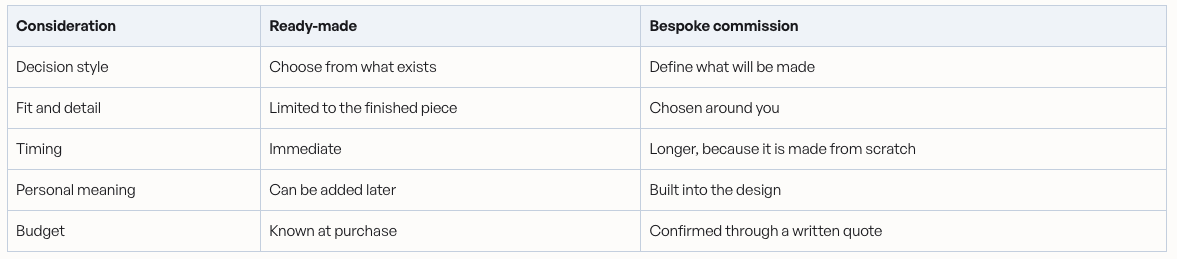
The table is not a verdict. It is a way to see where the effort sits. If you want a piece for a fixed date, say so at the start and ask whether the schedule is realistic. If you are flexible, you can give the maker room to solve a design problem well. Bespoke items generally take longer to create, and that is not a flaw in the service. It is the nature of the work.
Metal, Stone and Personal Meaning
Metal is the first place where a commission becomes physical. I work in Single Mine Origin gold, usually shortened to SMO, and many of my designs feature textural sandcasting. Sandcasting gives a raw, beach-sand texture that carries the mark of the process. Those choices are not for everyone. The question is whether they fit the piece you want to wear. A goldsmith should be able to explain the trade-offs, including how a finish will age and how a setting will sit.
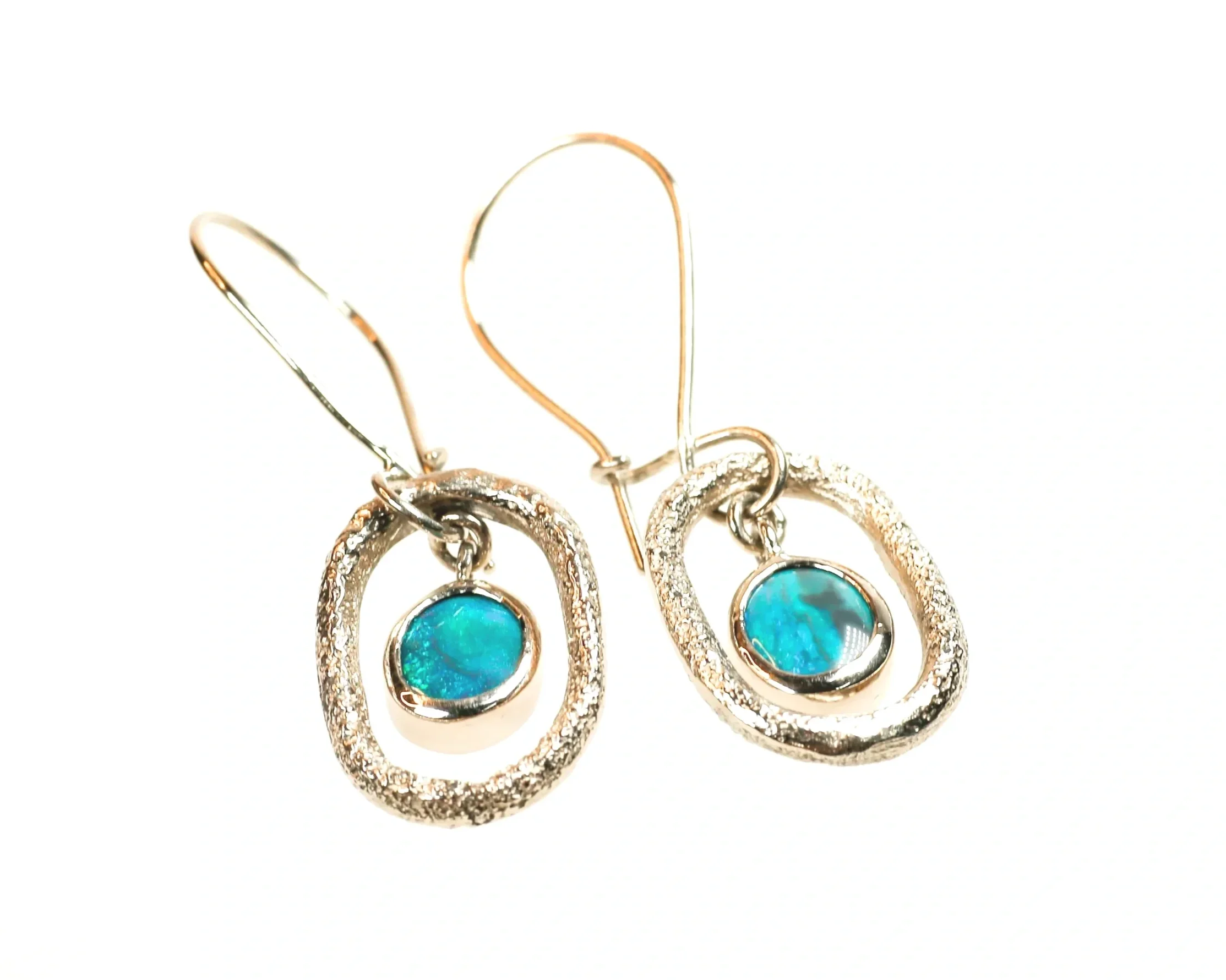
Stones carry their own decisions. You can choose a birthstone, work with an inherited stone or keep the design metal-only. The research around bespoke jewellery repeatedly returns to personalisation: a hidden message inside a band, a family stone reset, a birthstone added for a child. None of these details need to be visible to anyone else. That is often their strength. If you are buying for yourself, the meaning can be entirely yours, not a gift message written for an audience.
Craftsmanship Checks for a First Commission
A bespoke jewellery review guide should judge craftsmanship, gold, gemstones, pricing and aftercare before you commission. That is a useful checklist to carry into the conversation. Ask who will make the piece, how the metal will be worked and what examples you can see in person. Look at the finish on the inside of a band, the setting of a stone and the way a clasp or curve is finished. Photographs help, but a finished piece in the hand answers questions a screen cannot.
Ask about the maker's own bench practice. My work is handcrafted in Cambridge, with SMO gold at the centre of the studio. That is a specific way of working, not a generic luxury label. You should expect the same specificity from any maker you commission. If someone cannot explain how the piece will be made or who will make it, treat that as information. A first commission is not a test of your knowledge. It is a test of whether the maker can make the process clear.
Aftercare and the Long Wear
Aftercare is part of the purchase, not an afterthought. Ask how the piece should be cleaned, how often it should be checked and what the maker offers after collection. A piece worn daily will see more wear than one kept for evenings, and settings and surfaces can change over time. The answers should be practical. If you are buying for yourself, you are also the person who will maintain it, so keep the instructions somewhere sensible and ask questions before you leave.
Bespoke jewellery should feel personal, not complicated. The same applies to keeping it well. A clear aftercare conversation at the start saves guesswork later, when the piece is already part of your routine.
Buying for Yourself Without Apology
A self-commission does not need an excuse. It can mark a professional milestone, a birthday or a private decision that does not require an audience. The research on personal jewellery makes the point simply: something you wear forever should be personal to you. Bespoke lets you bring personality and uniqueness to the occasion, even when the occasion is your own. The guesswork drops away when you start with meaning, set a real budget, ask about craft and agree the details in writing.
If this is your first commission, the most useful thing you can do is arrive curious and specific. Bring a reason, a reference and a number. Ask who makes the work, what is included and how it will be cared for. A good commission does not make you feel tested. It makes you feel understood, and that is a far better foundation for a piece you will wear for years.
Frequently Asked Questions
These are the questions that tend to come up before a first commission, answered plainly so you can prepare for the conversation.
Do I need a clear design before I contact a jeweller?
No. A first consultation is where ideas, preferences and budget are discussed, and you can start with a reference, a material or a feeling rather than a drawing. Bring images and practical details about how you wear jewellery. The design develops through conversation, so you do not need to arrive with a finished brief.
Is bespoke jewellery always more expensive than ready-made?
Not always, but the comparison is not straightforward. A commission involves design time, materials and bench work, and the final figure depends on the piece. Ask for a written quote that sets out what is included. At my studio, bespoke commissions start from £3,000, which gives a clear starting point before the design is developed.
Can I use inherited stones or family metal in a commission?
Yes, that is one of the most personal reasons to commission. Heirloom redesign and remelting can turn a piece you do not wear into something current. The maker will need to assess the stones and metal before confirming what is possible. Ask how the original materials will be handled and what the change will mean for the finished piece.
How long does a bespoke commission take?
A commission generally takes longer than buying ready-made because the piece is made from scratch. The schedule depends on the design, materials and the maker's bench. Ask for a realistic timetable at the start and confirm it in writing. If you have a fixed date, say so before the design work begins so the maker can tell you whether it is achievable.