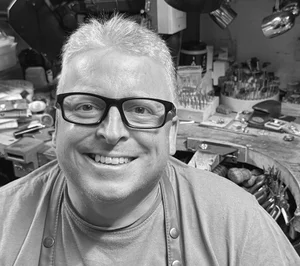
Burnout did not arrive for me as a mild dip in energy, in November 2018, it was a full-scale implosion.
What followed took time, therapy, and medication to untangle, and it forced an honest reckoning with how I was living and working.
Recovery did not happen all at once, nor did it come with a neat plan. In November 2020, while I was still finding my footing again, I began making things by hand, starting with a copper heart pendant for my wife for our copper wedding anniversary. That first piece was not a business strategy; it was simply an anchor.
From there, the craft began to hold shape. I went on to complete both the Fine Jewellery and Advanced Diplomas through Jewellers Academy, building real technical discipline alongside recovery, before formally setting up the company in mid 2022.
Why the Bench Changed My Relationship to Time
Moving toward goldsmithing changed how I experienced time almost immediately. A jeweller’s bench does not reward frantic speed. You cannot hurry a melt, force a clean sandcast impression, or file away shortcuts without the metal telling the truth in the finish.
Coming from a scientific background, I still care deeply about precision, structure, and how things hold together under close inspection. Yet working with precious metal and sand requires a different kind of discipline, one where patience is part of the craft rather than an obstacle to it. When you are shaping form by hand, your attention has to stay in the room with the material. There is a quiet relief in doing one thing properly, step by step, and seeing the result take physical shape.
Building a Business Around Intention, Not Hustle
Setting up the company in 2022 after years of recovery meant building a studio on different terms from the start. Rather than chasing volume or treating every piece as a race to market, I wanted a practice defined by deliberate choices, smaller numbers, slow making, and materials whose provenance stands up to scrutiny.
That mindset shapes everything that leaves the workshop. Whether I am working with SMO Gold and certified Ocean Diamonds so the provenance is clear on paper, or using Sentimental Topography to cast the texture of a meaningful coastline or landscape into a single-use sand mould, the work is meant to carry weight beyond the moment it is bought. Running an independent studio is still demanding, every business has its realities, but building around intention rather than constant urgency makes the effort feel worthwhile.
What It Means for the People Who Commission Pieces?
A piece of bespoke jewellery is rarely just an ornament; it is usually tied to a commitment, a milestone, a memory, or a family story. When someone commissions a ring or a band, they are placing trust in the person holding the torch and the files.
Stepping out of burnout into this craft made me a calmer, more present maker. In my studio in Cambridgeshire—and in consultations with clients across the UK—the process is designed to be thoughtful rather than rushed, from the first conversation through to a hallmarked piece meant to last for generations. Trends move quickly, and noise is easy to find; quiet, well-made work has a way of outlasting both.
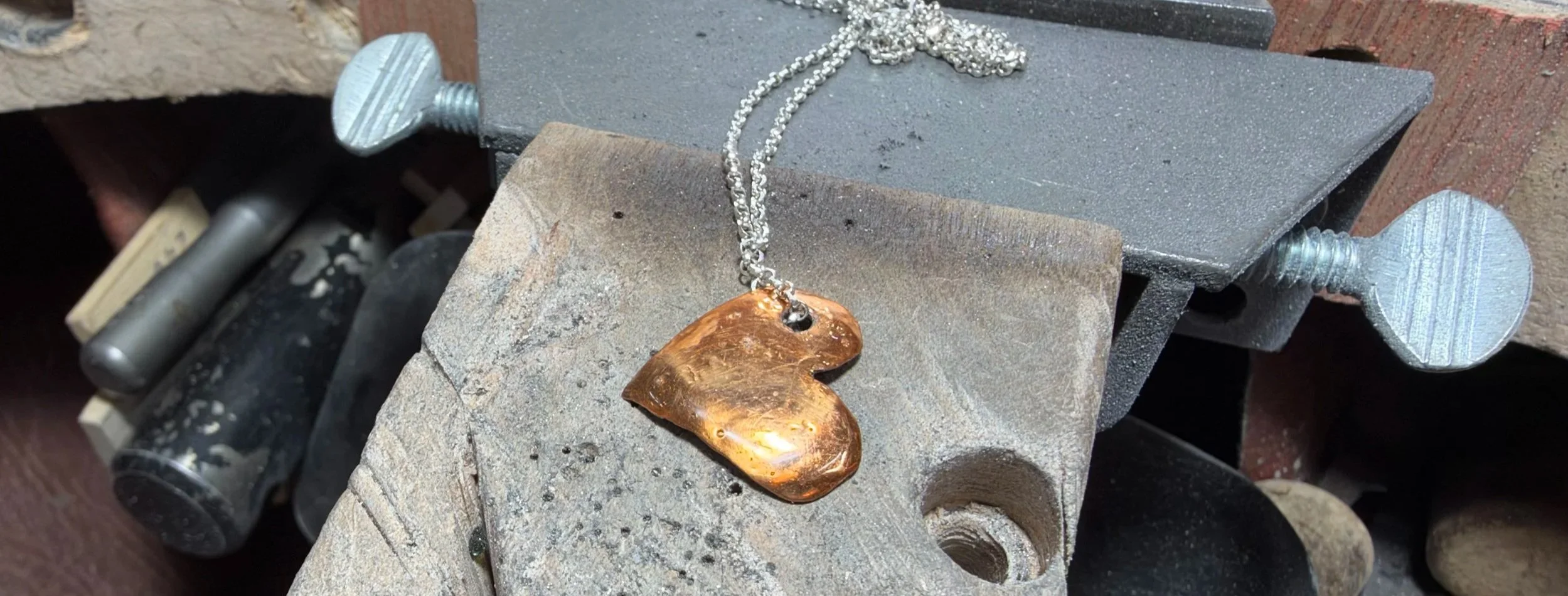
Copper heart pendant, hand-made, November 2020